MM logo white 1
MM logo red
Image description is not available

Installing a built-in fridge: how do you do it?

Amina11 MARCH 2026
Hands measure a brown door frame with a yellow tape measure in a bright room.

Are you dreaming of a built-in fridge in your new or existing kitchen and want to roll up your sleeves and do it yourself? Then our step-by-step plan is exactly what you need. On this page, we explain more about measuring the niche dimensions and fitting your door panels.

How do you install a built-in fridge?

A white refrigerator, stocked with fresh vegetables such as carrots, broccoli, radishes, and beets, stands open.

Installing a built-in fridge might seem like a difficult task, but with the right preparation and a step-by-step approach, it’s perfectly doable yourself. Below you’ll find all the steps you need to integrate your fridge seamlessly into your kitchen.

Discover all our fridges
A kitchen scene shows a refrigerator, wooden shelves with jars, and blue tiled walls. Light streams in from a door.

Installing a built-in fridge in an existing or new kitchen

You can fit a built-in fridge in both a new and an existing kitchen. If you’re working with an existing kitchen, you’re restricted by the niche dimensions, and you’ll choose a fridge based on those. With a new kitchen, you naturally have more freedom – for example, you could even install an American-style fridge.

A yellow measuring tape is used on a white wall; a smiling person with glasses is visible in the background.

Measure the niche dimensions in advance

The first step in installing a fridge is measuring the niche dimensions – the cabinet space where you want to place the fridge. Use a tape measure and note down the height, width and depth of the niche. Bear in mind that you need to allow enough space for ventilation; usually a margin of a few centimetres is sufficient.

Measuring a refrigerator with a yellow measuring tape. The tape shows the number 42 to 52. There are notes on the door.

Measure the product dimensions in advance

Besides the niche dimensions, it’s important to know the dimensions of the fridge itself. Don’t just look at the external measurements – also check whether the appliance requires a minimum distance from the rear wall. For some models, this distance is crucial for proper operation.

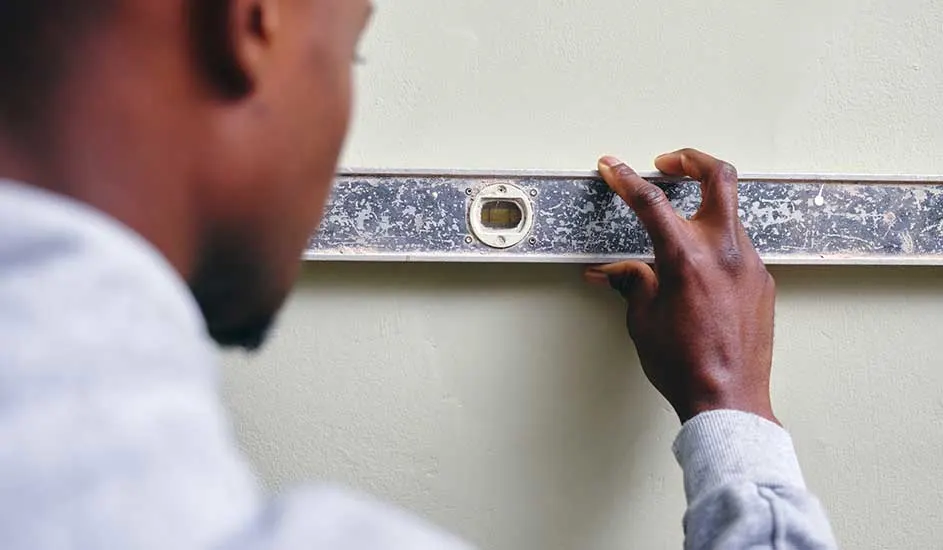
A level tool is positioned on a light-colored wall, held by a hand. The tool has a central bubble indicator.

Choose the right tools

Good preparation is half the job. Make sure you have the right tools to hand:

  • A spirit level to check that the fridge is level.
  • A drill for fastening screws.
  • A screwdriver.
  • Optionally, a saw to make adjustments to plinths or panels.

A hand opens a stainless steel fridge covered in colourful sticky notes with push pins on a light wooden surface.

Check the door opening direction

Before you start, check that the door opening direction suits your kitchen layout. With many fridges, you can change the door opening direction. Check the appliance manual for instructions.

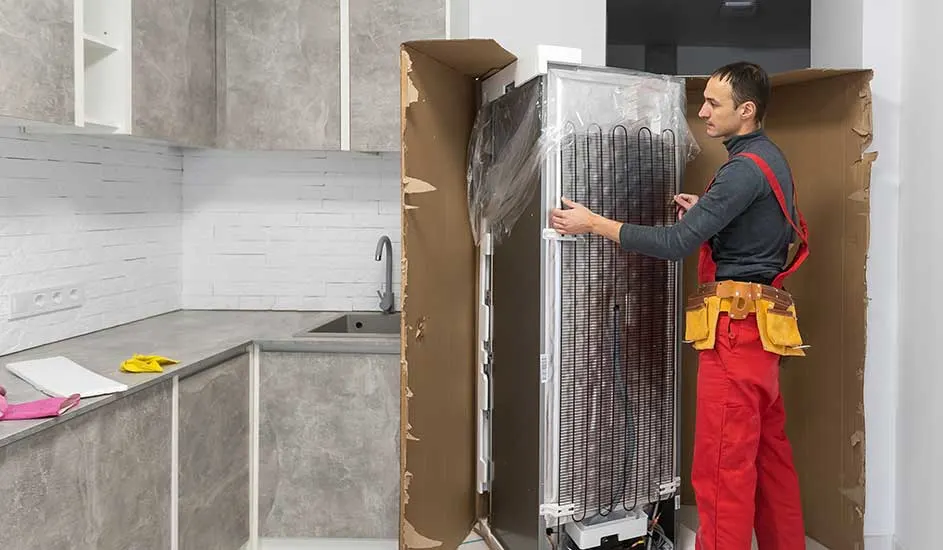
A worker installs a fridge in a kitchen. The fridge is in cardboard packaging. The kitchen has grey cabinets and a white brick-style backsplash.

Fit the cover panel and trim strip

A cover panel and trim strip provide a neat finish and help keep the fridge securely in place. Fit these parts according to the manufacturer’s instructions. These fridge accessories are often included.

A stainless steel refrigerator is being installed in a white room. The fridge has two sections.

Secure the fridge in place

Carefully slide the fridge into the niche and use a spirit level to check that it is standing straight. Secure the fridge to the niche using the supplied brackets or screws. This prevents the fridge from shifting when you open the door. You’ll find a detailed step-by-step guide in your fridge manual.

Attaching a sliding-door (sliding hinge) front panel

With a sliding-door system, the front panel slides along a rail connected to the fridge door. First attach the rails to the fridge door, then mount the front panel onto the rails. Check that the front panel opens and closes smoothly.

Attaching a door-on-door front panel

With a door-on-door system, you mount the front panel directly onto the fridge door. Use the screws and brackets supplied with the fridge to fix the front panel securely in place. Again, check that the door opens and closes smoothly.


Our installation service for your fridge

A row of silver refrigerators with a white interior is displayed. A woman points to the inside of the open refrigerator.

Would you rather hire a professional to install your fridge? When purchasing a fridge, you can choose the option to have it installed by our professionals. They will also take away your old fridge.

View our best fridges

Our advice for installing a built-in fridge

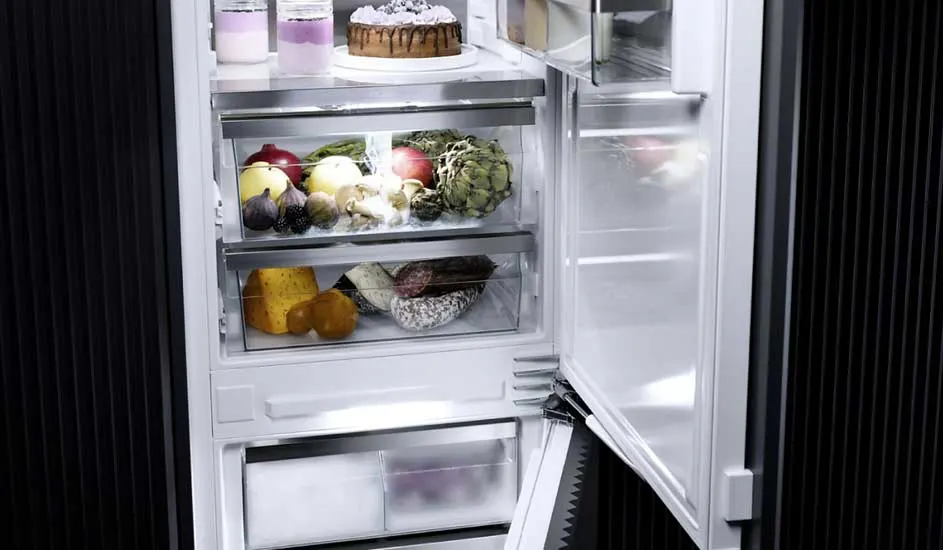
The open refrigerator has shelves with fruit, cheese, and cake. The refrigerator door is white, with a black patterned exterior.

As you’ve seen in this article, installing a fridge isn’t very difficult. A built-in fridge gives a sleek, modern look. Whether you want to install a standard fridge or an American-style fridge, you can do it yourself or have it done by our professionals.

Compare all fridges

These articles might also be of interest to you