MM logo white 1
MM logo red
Image description is not available

What is noise cancelling?

Anouk7 APRIL 2026
A crowded walkway, with a person in an orange jacket and headphones in the foreground.

Are you bothered by distracting sounds while you’re listening to music or working? Then noise cancellation is made for you. Headphones or earphones equipped with this smart technology actively reduce ambient noise, so you can enjoy peace and quiet. On this page, you’ll discover what noise cancelling is, how it works and which types exist.

How does noise cancellation (noise reduction) work?

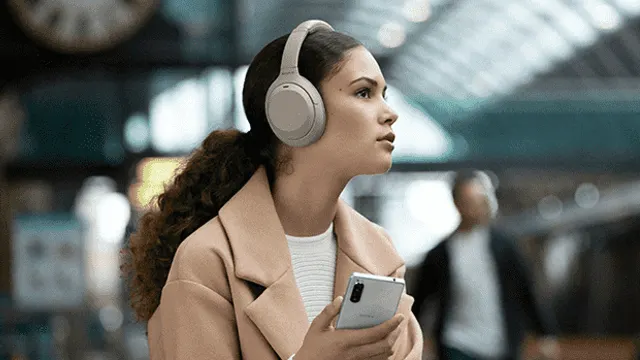
Image shows wireless headphones, beige coat, and white smartphone, set against a blurred background with clock and metallic structure.

Noise cancelling does much more these days than simply suppress ambient sound. Your headphones pick up unwanted noise via built-in microphones, analyse it and then send an opposite sound signal – the so‑called anti-noise – back to your ears. This makes the surrounding noise disappear as if by magic. There are, however, different types of noise cancelling, so be sure to read on to discover which technique suits you best.

Discover all our noise cancelling headphones
All types of noise cancelling techniques explained

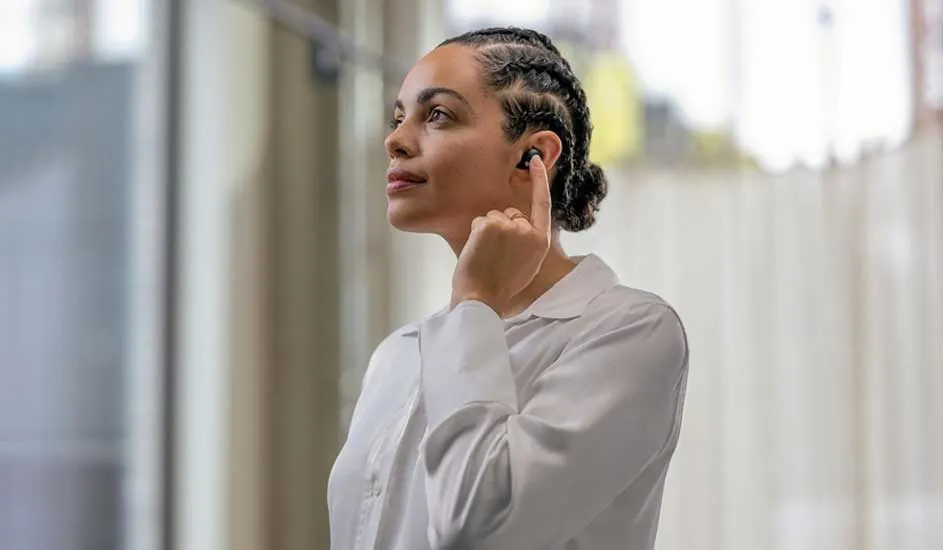
A person wears a white shirt and earbuds. They touch the earbud with a finger. The background shows a window with light-colored curtains.

There are different types of noise cancellation. It’s useful to know which type best suits your situation. Below, we explain the difference between passive and active noise cancelling and highlight 2 more advanced techniques.

View our noise cancelling earphones

Passive vs active noise cancelling: what’s the difference?

Image shows a laptop, grey headphones, and a grey v-neck sweater with a red undershirt. There's a necklace and blurry background.

Passive Noise Cancellation: does its job without using any technology. It’s purely the physical sealing of your ears. Think of well‑fitting ear cushions or in‑ear buds that fill your ear canal. They mainly reduce higher frequencies and are suitable, for example, at the office or during a quiet train journey.

A person wears headphones and a plaid jacket at a cafe. A mug sits on the table. Other people are in the background.

Active Noise Cancellation (ANC): goes a step further and does use technology to filter out sound waves. Microphones in your headphones or earphones pick up ambient noise. The system then sends out an opposite sound signal that neutralises the unwanted sound. This makes mainly low tones, such as the hum of an engine or air conditioning, disappear as if by magic. In short: passive reduces sound, active suppresses it.

Adaptive noise cancelling and Environmental noise cancelling

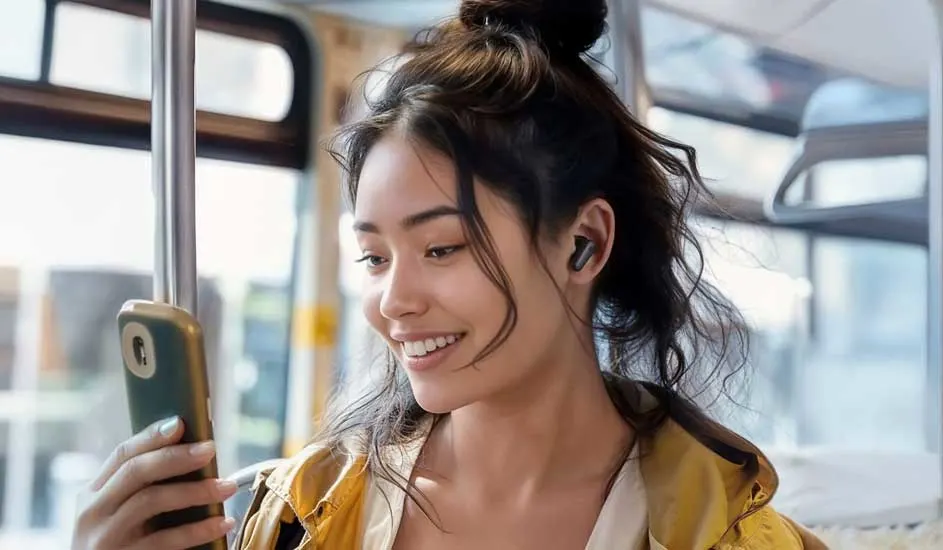
On a bus, a person holds a phone. The phone is greenish. The person wears a yellow jacket and earbuds. Outside the bus, there is a view.

Newer models are equipped with smarter forms of ANC, especially useful if you’re often on the go or frequently make calls in busy environments.

Adaptive Noise Cancellation: automatically adjusts the level of noise reduction to your surroundings. The microphones continuously analyse the ambient sound, and the headphones or earphones adjust the ANC intensity in real time for the best result. Ideal for commuters or anyone who travels a lot.

A person in a white t-shirt holds a smartphone, adjusting a white earbud. Behind them is a colorful graffiti wall with blues, purples, and oranges.

Environmental Noise Cancelling (ENC): focuses on your voice during phone calls. It filters out distracting background noise so that you remain clearly audible to the person you’re talking to. This is very practical in windy or noisy environments, such as on the street or in open‑plan offices.

Both technologies provide calm and clear communication, wherever you are.

Headphones or earphones with noise cancelling: which should you choose?

Close-up shot with green headphones in urban setting, necklace with butterfly charm, ring, and buildings in background.

The choice between earphones or headphones with noise cancelling mainly depends on your personal preferences and how you plan to use them. Headphones fully enclose your ears, which often provides better passive isolation and can be more comfortable for long-term use, for example during long journeys. Earphones with ANC, including the Apple AirPods or Samsung Galaxy Buds, are more compact and easier to take with you, making them suitable for on the go or as wireless sports earphones.

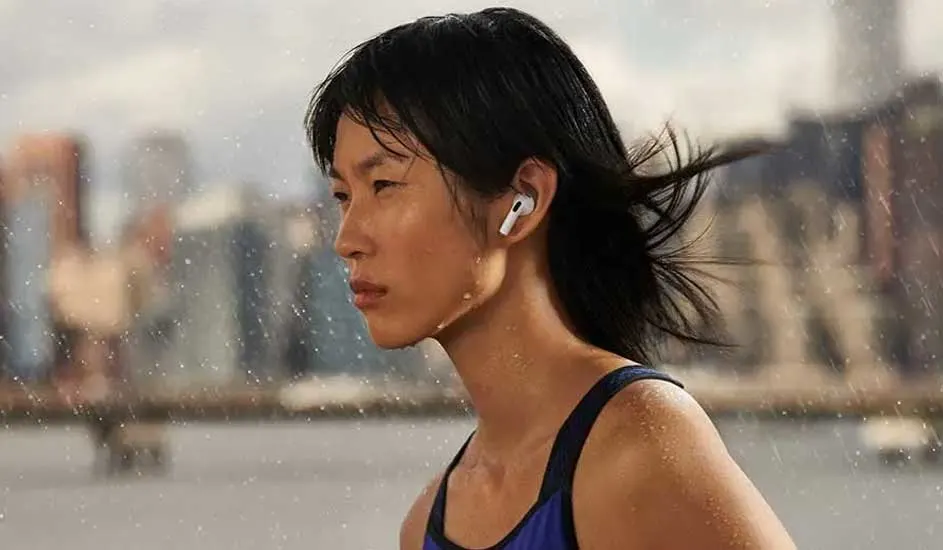
Close-up of white wireless earbuds in ear, wet hair and skin, wearing blue top in rain. Buildings blurred in background.

Pay close attention to the ANC specifications, as not every model performs the same. In addition, some models have a ‘transparency mode’, which temporarily lets in ambient sound. You can use this mode to move more safely in traffic or if you still want to be able to hear someone who unexpectedly speaks to you.

Noise‑cancelling advice at MediaMarkt

Are you fed up with background noise while you’re listening to music or trying to concentrate? At MediaMarkt, you can find out everything about noise cancelling. From how active noise cancelling (ANC) works to how it differs from passive techniques, we explain it clearly – whether you’re looking for earphones for on the go or headphones to work in peace and quiet. Discover our best noise‑cancelling headphones, from entry‑level models to premium headsets, so you can always enjoy clear sound without distracting background noise.

Frequently asked questions

These articles might also be of interest to you