MM logo white 1
MM logo red
Image description is not available

HEPA filter: what is it exactly?

Bram3 MAY 2026
A close-up shows a modern device with a transparent reservoir; blue light trails suggest powerful airflow and technology.

A HEPA filter removes fine dust, pollen, and other particles from the air. HEPA filters are used in appliances such as vacuum cleaners and air purifiers to release filtered air back into the room. This means you breathe in cleaner air and can reduce allergy symptoms at home. Discover here which types of HEPA filters there are, how HEPA works exactly, and whether a HEPA filter could benefit your home.

What does HEPA stand for?

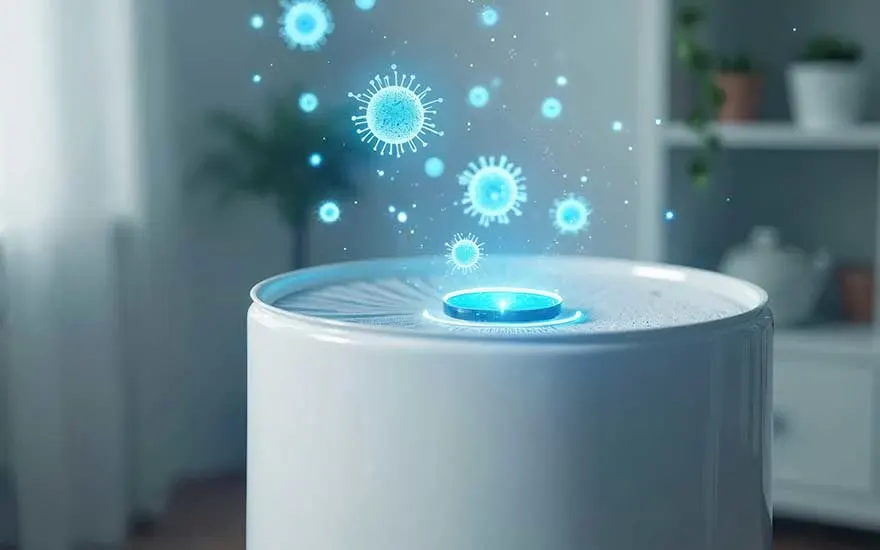
A white device blows or filters air; above it float blue virus-like icons in a soft, modern indoor setting.

HEPA stands for High Efficiency Particulate Air. It’s the name of a specific type of air filter designed to remove very small particles from the air. HEPA is an internationally recognised standard, which means a filter with that name must meet certain requirements. In practice, this means that the filter removes up to 99.97% of very small particles such as dust, pollen, bacteria, and mould from the air. It’s also the technology you’ll find in products such as air purifiers and vacuum cleaners. By removing these fine particles from the air, these appliances help create cleaner air at home.
How a HEPA filter works

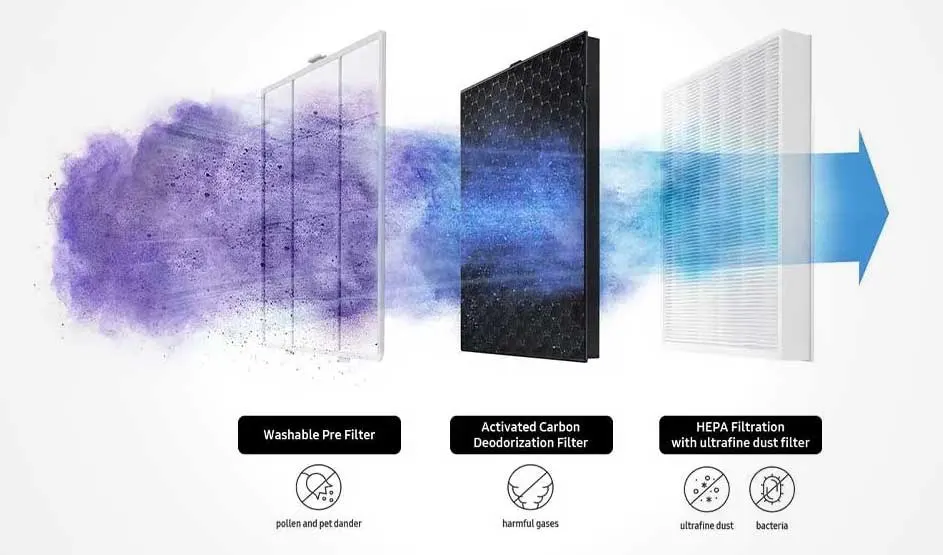
A diagram shows air purification through multiple filters: pre-filter, activated carbon, and HEPA, as dust and air flow left to right.

Inside a HEPA filter, air flows through a dense network of fibres. Along the way, even the smallest particles and impurities are trapped:

  1. Air is drawn through the HEPA filter and passes through a compact network of fibres that works like a kind of maze for particles.
  2. Larger particles such as pet hair and pollen collide with the fibres and are removed from the airflow.
  3. Medium-sized particles penetrate deeper into the HEPA fibres and become trapped there.
  4. The smallest particles move randomly through the air and eventually also collide with the fibres, causing them to stick there.

Different HEPA filters: what types are there?

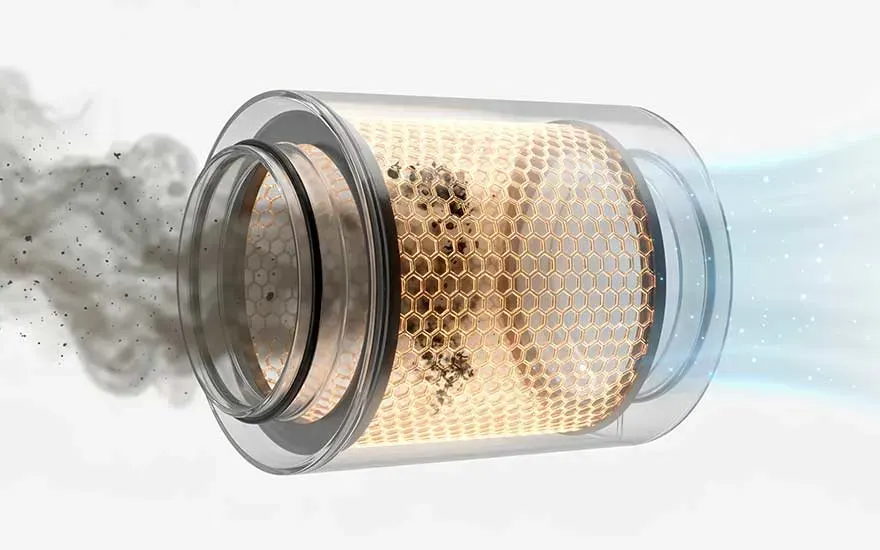
A cutaway shows a cylindrical filter trapping gray smoke, while cleaner blue air exits from the other side.

HEPA filters are divided into different classes, from E10 to H14, based on how effectively they remove very small particles from the air. The higher the class, the more particles the filter can trap. After HEPA comes ULPA, with classes U15, U16, and U17.

For home use, you’ll mainly come across HEPA 13 and HEPA 14. A HEPA 13 filter captures at least 99.95% of particles and is often used in air purifiers designed to tackle allergies and finedust. HEPA 14 is one class higher and has an efficiency rate of 99.995%.

When is a HEPA filter useful?

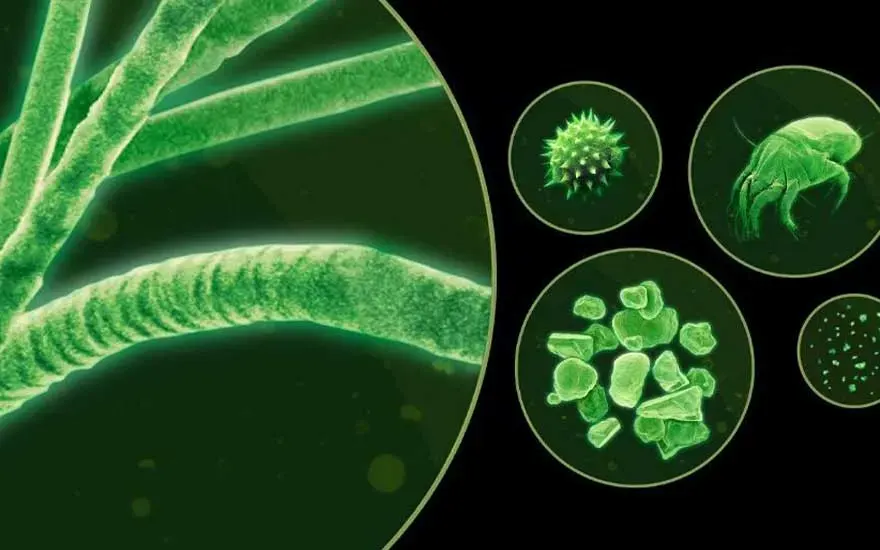
A magnified view shows fibers and tiny particles such as pollen, mites, and dust, displayed in green circles on a black background.

Not sure whether a HEPA filter is right for you? You’ll often notice the difference first in the bedroom. If you’re affected by house dust mites and other particles in the air, there’s a chance you’ll wake up with a blocked nose in the morning. An air purifier with a HEPA filter helps keep the air cleaner during the night. During hay fever season, this kind of filter also helps reduce the amount of pollen in indoor air, which may ease your allergy symptoms.

A HEPA filter is also useful if you live in a city or near a busy road, as it helps remove fine dust that enters your home from the air. If you have pets, a HEPA filter is better at capturing dander and hair too.

Products with a HEPA filter

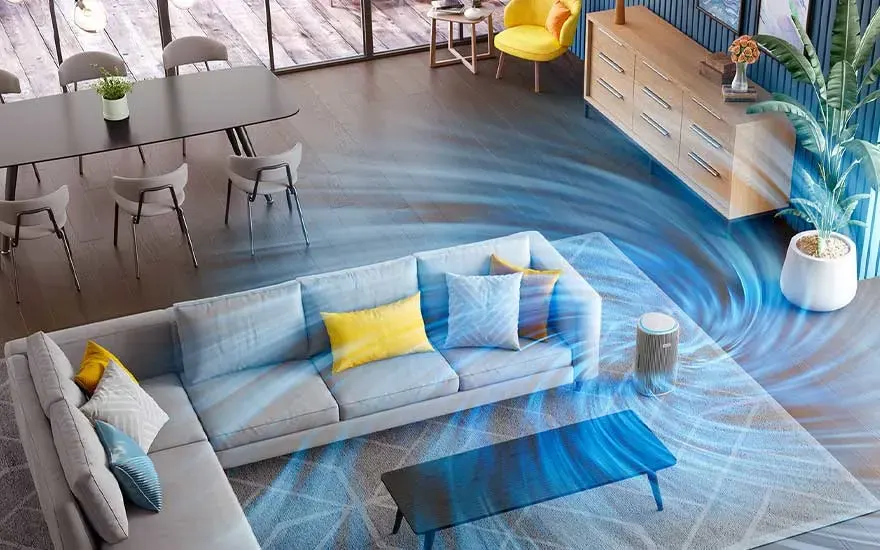
A modern living room shows an air purifier beside the sofa; blue waves illustrate air circulation throughout the room.

HEPA filters are used in appliances that draw in air and release it again, such as vacuum cleaners and air purifiers. In a vacuum cleaner with a HEPA filter, fine particles such as dust and skin flakes remain trapped in the filter so they aren’t blown back into the room. In an air purifier, the HEPA filter continuously cleans the air in the room by capturing fine particles.

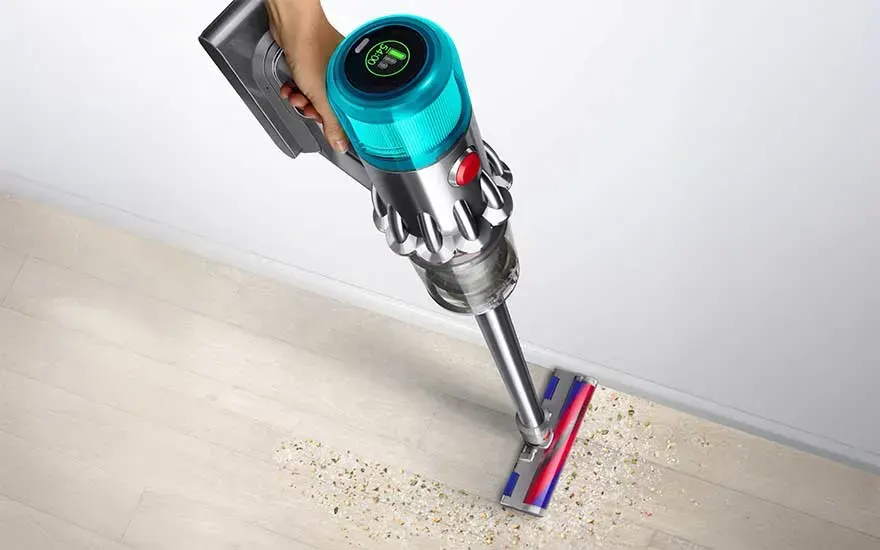
A cordless stick vacuum cleans crumbs from a light floor; a hand firmly holds the modern device.

Vacuum cleaners

In a vacuum cleaner, the HEPA filter is positioned at the end of the airflow, just before the air is released back into the room:

  1. The vacuum cleaner draws in air along with dust, hair, and other dirt.
  2. Larger particles are collected in the dust container, or in the dust bag if you have a bagged vacuum cleaner.
  3. The air passes through the HEPA filter, where even the smallest particles are captured.
  4. The vacuum cleaner releases the filtered air back into the room.

Choose the right vacuum for allergies
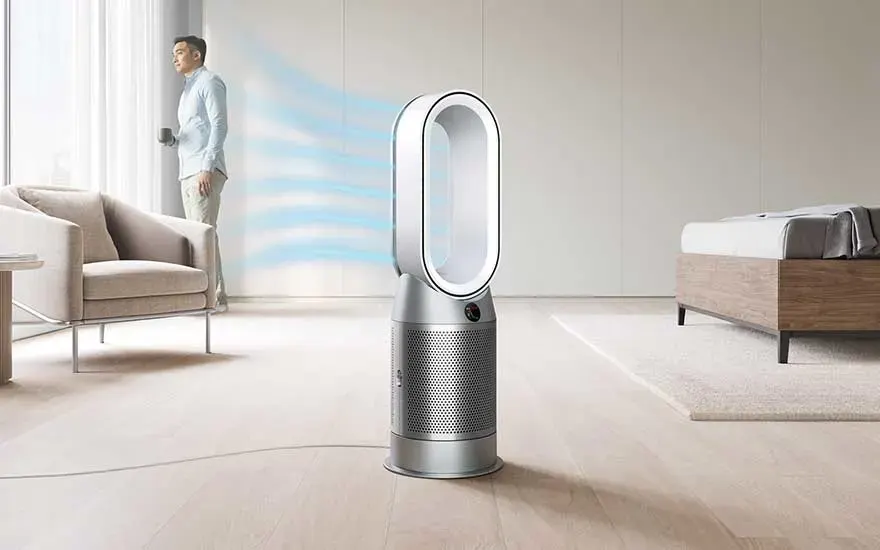
A modern air purifier or fan stands in a calm room; blue airflow streams toward a man standing by the window.

Air purifiers

The most important part of an air purifier is the filter. An air purifier with a HEPA filter cleans the air continuously while the appliance is running:

  1. The appliance draws in air from the room using a fan.
  2. Larger particles such as fur and hair are first trapped by a pre-filter.
  3. The air passes through the HEPA filter, where fine particles such as pollen, fine dust, and smoke particles are captured.
  4. The purified air is released back into the room.

How does an air purifier work?

When should you replace a HEPA filter?

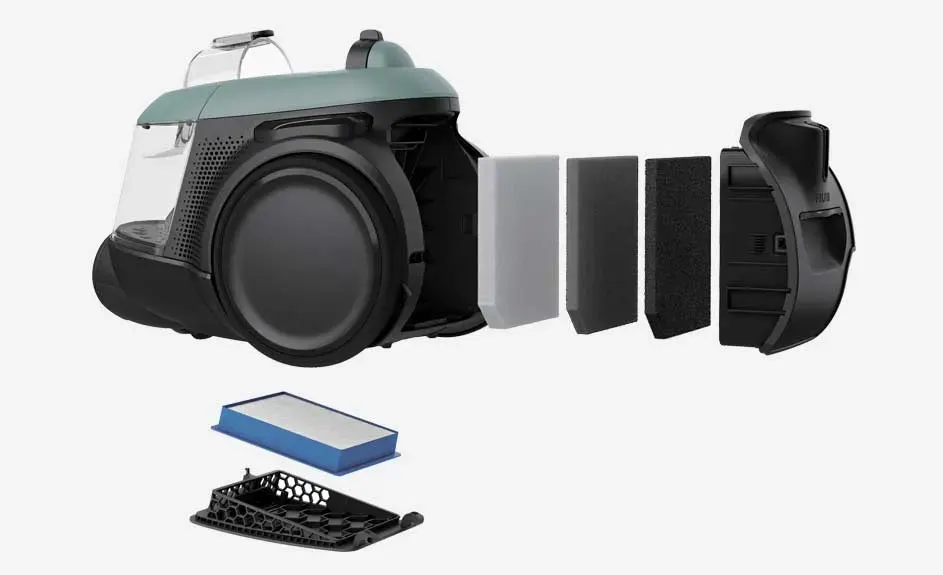
A vacuum cleaner is shown in an exploded view with separate filters and parts beside it, revealing the internal filtration system.

A HEPA filter becomes saturated over time. As a result, it allows less air to pass through and becomes less effective at trapping fine particles.

It’s best to replace the HEPA filter in your vacuum cleaner every 6 to 12 months. If your pets shed a lot or you live in a dusty environment, this may be closer to every 3 to 6 months. Look out for the following signs:

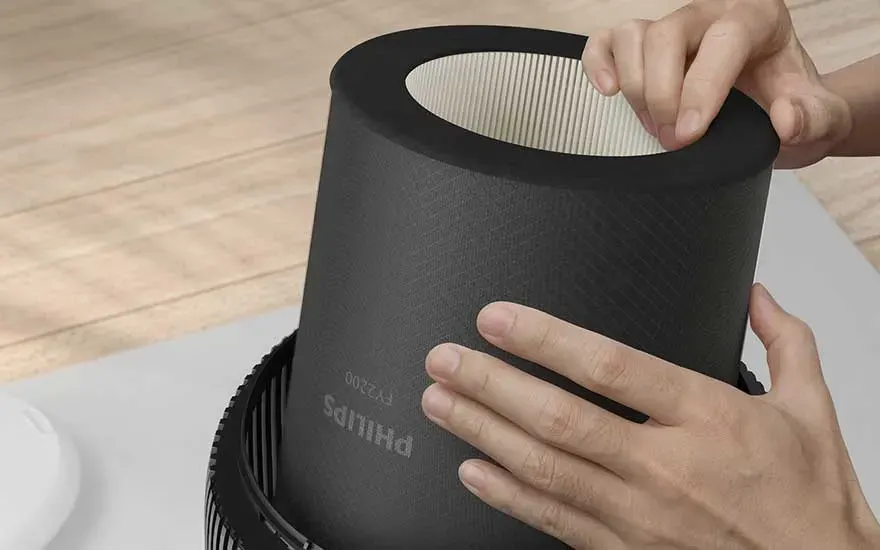
Two hands carefully place a black cylindrical filter into a device; the white pleated inner lining is visible.

You should also replace the HEPA filter in your air purifier every 6 to 12 months. If you use it regularly or suffer from asthma or allergies, it’s often best to replace it sooner. These signs indicate that your filter needs replacing:

  • The air purifier shows a notification that the filter should be replaced.
  • A dusty or musty smell comes from the appliance.
  • The appliance works less efficiently.

How do you choose the right air purifier?

Our advice on HEPA filters at MediaMarkt

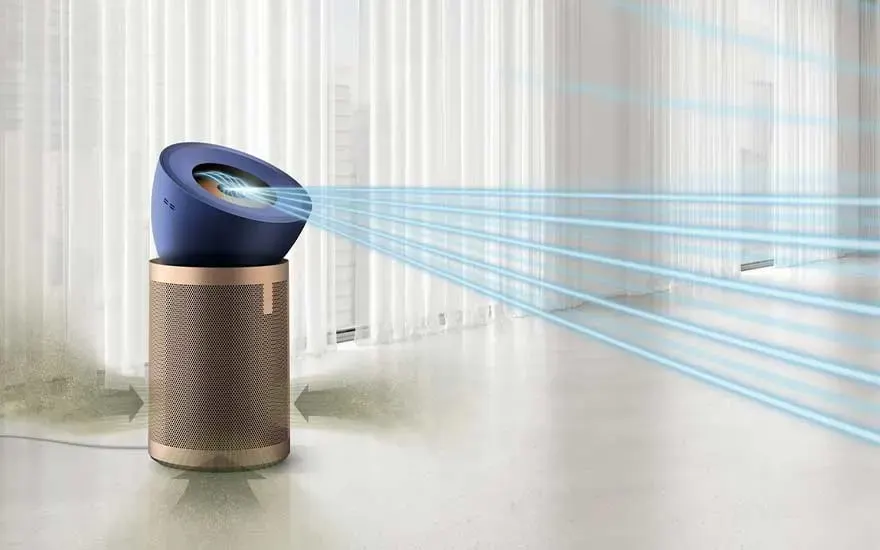
A modern device blows focused blue air streams into the room; it stands before white curtains on a light floor.

A HEPA filter removes up to 99.97% of very small particles such as dust, pollen, and bacteria from the air. This helps reduce allergy symptoms and keeps the air in your home cleaner. In household appliances such as vacuum cleaners and air purifiers, it’s best to choose a HEPA 13 or HEPA 14 filter. Replace a HEPA filter in time to make sure your appliance keeps working effectively.

Frequently asked questions about HEPA filters

These articles may also be interesting for you