MM logo white 1
MM logo red

What is a fully automatic bean-to-cup coffee machine?

Amina17 AUGUST 2026
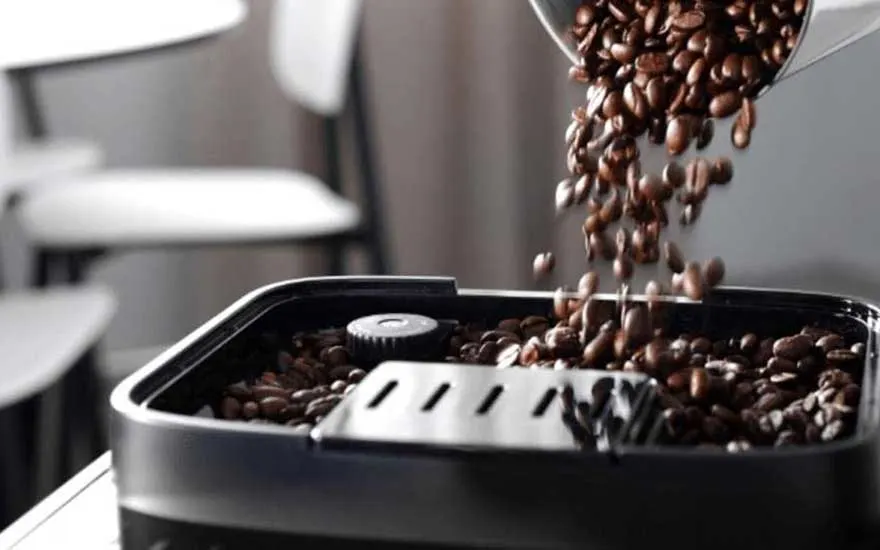
Bosch bean-to-cup machine as glossy coffee beans cascade into the hopper, ready for freshly ground coffee in a modern kitchen.

A fully automatic bean-to-cup coffee machine offers a convenient way to make high-quality coffee. You can enjoy a cup of freshly ground coffee at home and adjust it to your personal taste. Discover how a fully automatic bean-to-cup coffee machine works, what its advantages are, what to consider when choosing one and how to maintain it.

How does a fully automatic coffee machine work?

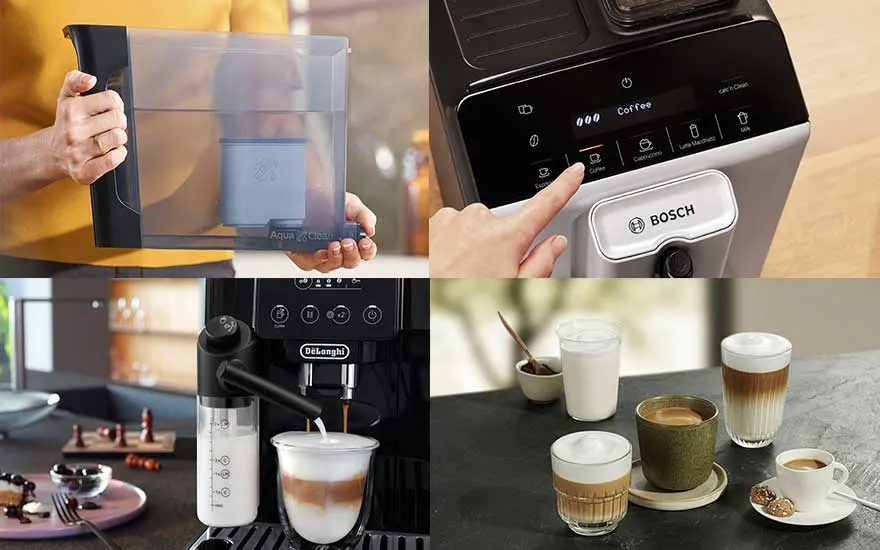
Collage showing water-tank filling, coffee selection on the display, milk frothing and a neat row of finished coffee drinks.

A fully automatic bean-to-cup coffee machine prepares your favourite coffee entirely automatically. All you need to do is make sure the bean and water reservoirs are filled. Here's how to use a fully automatic coffee machine:

  1. Fill the bean hopper with coffee beans. The beans are stored in an airtight compartment to preserve their aroma as well as possible.
  2. Fill the water reservoir.
  3. Choose the coffee you want to prepare using the buttons or display.
  4. Press the start button to begin the brewing process. The machine automatically takes the required amount of coffee beans and grinds them just before extraction using the built-in coffee grinder. This helps preserve the aroma and flavour of the coffee.
  5. The water is then heated to between 90 and 96 °C and forced through the ground coffee at high pressure. This extracts the aromas, oils and flavours from the coffee.
  6. If your chosen drink contains milk, the machine draws milk from a reservoir or through a milk tube. It heats and froths the milk and automatically adds it to your cup.
  7. The used coffee grounds are automatically collected in the coffee grounds container, which you can easily empty afterwards.
  8. All that's left to do is enjoy your coffee.

View the best bean-to-cup coffee machines
What is the best brand for a fully automatic coffee machine?

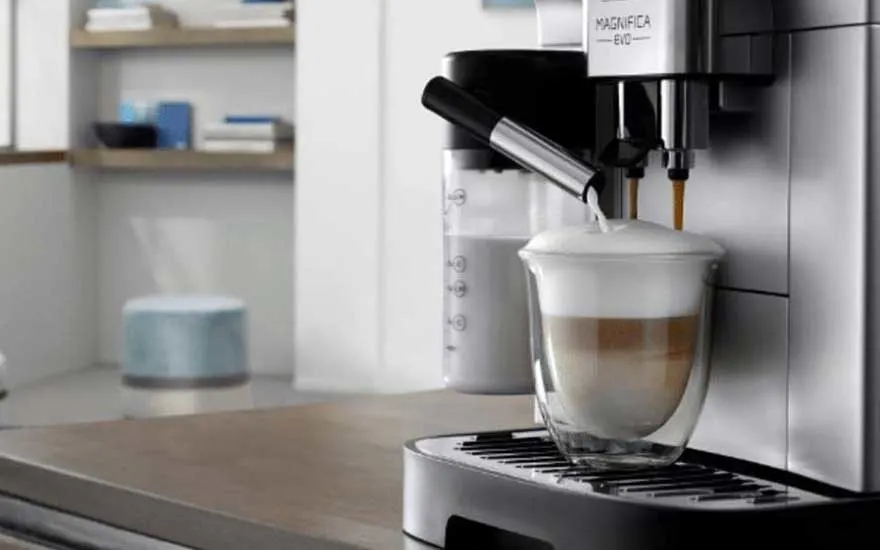
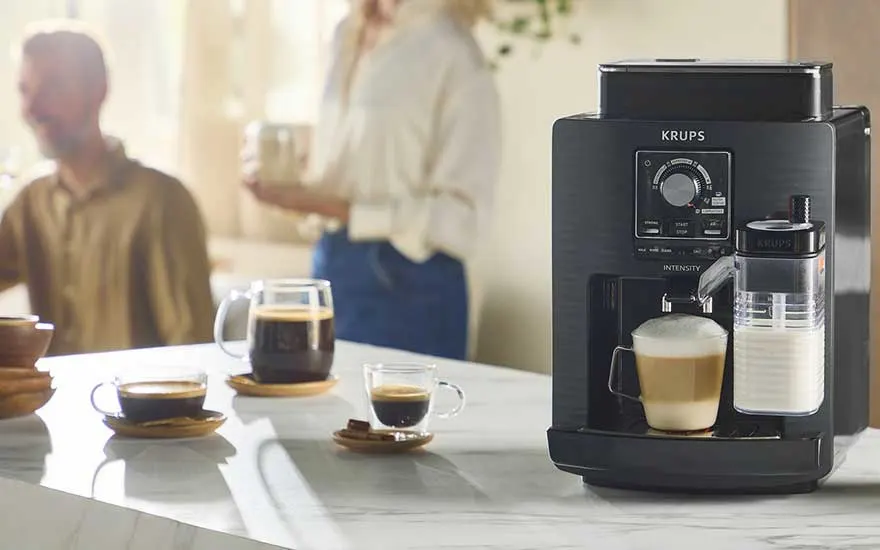
Krups coffee machine prepares a foamy latte on a marble table, with chatting people softly blurred in a relaxed café setting.

Many brands offer high-quality fully automatic coffee machines. With the touch of a button, you can effortlessly prepare a fresh espresso, lungo or cappuccino. SMEG espresso machines, for example, are known for their retro design, while Siemens coffee machines are known for their quiet operation and KRUPS bean-to-cup coffee machines for their powerful pump pressure. De'Longhi is appreciated for the excellent quality of its espresso machines, extensive customisation options and powerful built-in coffee grinders. On many models, you can adjust the grind size, coffee strength and water temperature. Many machines also feature an automatic milk system for preparing cappuccinos, latte macchiatos and other milk-based drinks. Philips coffee machines are known for their ease of use and good value for money. They are equipped with a ceramic coffee grinder that provides an even grind and a long service life. Many models also feature automatic maintenance programmes and, on some models, an AquaClean filter. This helps reduce limescale build-up, meaning you need to descale the machine less often.

What are the advantages and disadvantages of a fully automatic coffee machine?

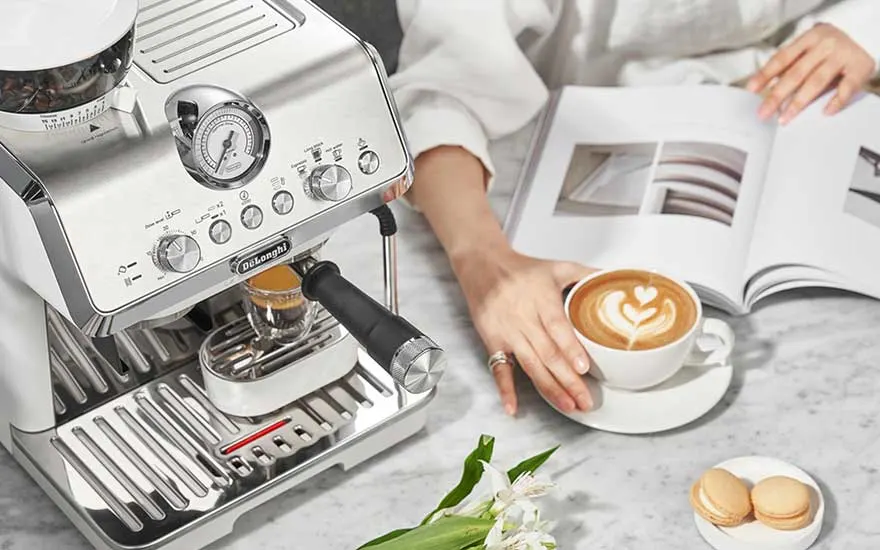
DeLonghi manual espresso machine with latte art, set beside an open book and colourful macarons for an elegant coffee moment.

These are the main advantages and disadvantages of a fully automatic bean-to-cup coffee machine:

Advantages:

  • Prepares your coffee automatically, from grinding the beans to pouring the coffee.
  • Always enjoy freshly ground coffee thanks to the built-in coffee grinder, which grinds the beans just before brewing.
  • Consistent coffee quality, cup after cup.
  • Plenty of customisation options, such as coffee strength, water quantity, grind size and water temperature, depending on the model.
  • Suitable for different coffee specialities, such as espresso, lungo, cappuccino and latte macchiato.
  • Intuitive and quick to use, often with the touch of a button.
  • Easy to maintain thanks to automatic rinsing and descaling programmes.

Disadvantages:

  • Higher purchase price than a traditional coffee machine or capsule coffee machine.
  • A machine with a milk system requires additional maintenance to keep the milk circuit clean.
  • Usually takes up more space.
  • The built-in coffee grinder can be relatively noisy while grinding.

Which coffee beans are best for a fully automatic coffee machine?

Close-up of aromatic coffee beans being poured into a grinder hopper, revealing warm tones and rich, tactile textures in close detail.

For the best results, choose coffee beans that are medium-roasted and dry roasted. Medium-roasted beans offer a good balance between aroma, acidity and bitterness. They provide a rich flavour while preserving the coffee's natural characteristics. This makes them well suited to your automatic coffee machine, which is designed to extract the aromas of this type of coffee bean effectively. Dry-roasted coffee beans are also a good choice because they contain less oil. They move more easily through the coffee grinder, reducing the risk of blockages. Using drier beans can also reduce how often you need to clean the machine. By contrast, avoid dark-roasted and oily coffee beans. Their greasy surface can leave residue in the coffee grinder and brewing unit.

How to choose the best coffee beans

What is the average lifespan of a fully automatic coffee machine?

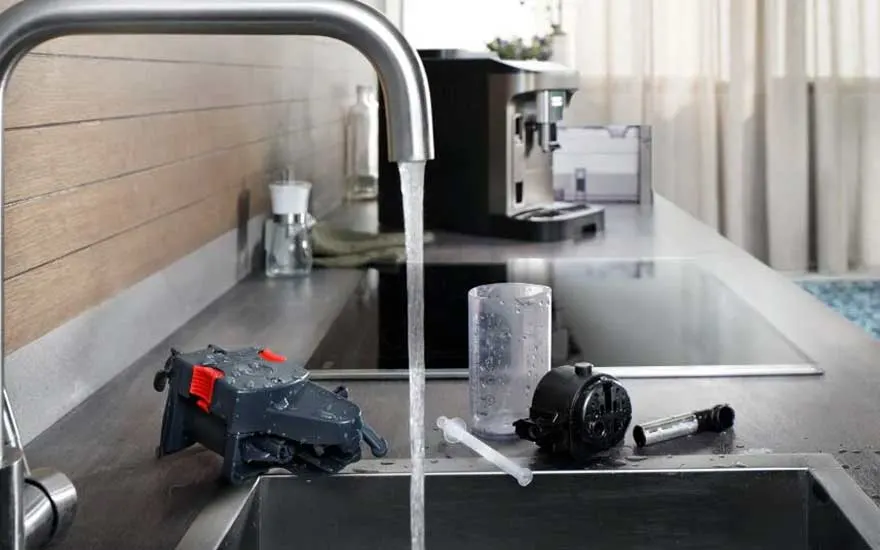
A sink with a running tap as removable coffee-machine parts are carefully rinsed and cleaned after a busy morning at the kitchen sink.

With proper maintenance, your fully automatic coffee machine can continue to perform well. How often you make coffee also affects its lifespan. Your choice of coffee beans can have an impact too. Medium- and dry-roasted coffee beans are recommended because they leave fewer oily residues. By contrast, coffee beans that have been roasted for longer and are therefore oilier can cause the coffee grinder and brewing unit to become dirty more quickly. This increases wear on the machine's components.

How do you maintain a fully automatic coffee machine?

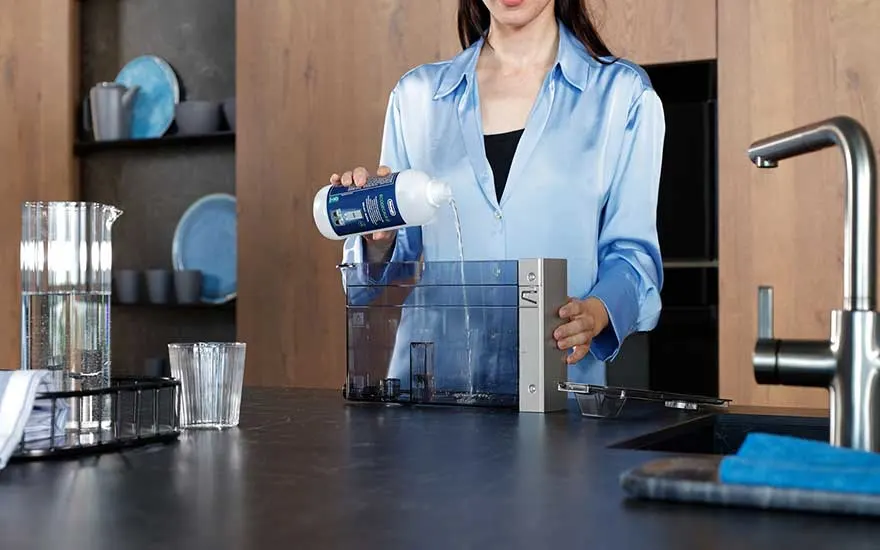
A woman pours cleaning liquid into her coffee machine’s removable water tank during a careful routine maintenance session.

Regular maintenance is essential to keep your fully automatic coffee machine performing well. Empty the coffee grounds container and drip tray after each use. Then rinse the removable parts and clean them with suitable coffee machine maintenance products. If your machine has a milk system, clean it after every preparation to prevent milk residue from building up. Also clean the brewing unit regularly and fill the water reservoir with fresh water each time. Descale the machine according to the manufacturer's recommendations or when the machine indicates that it is necessary. If you use a water filter, it can help reduce limescale build-up.

Find out how to descale a coffee machine

Buy your favourite automatic coffee machine

Advice on fully automatic coffee machines at MediaMarkt

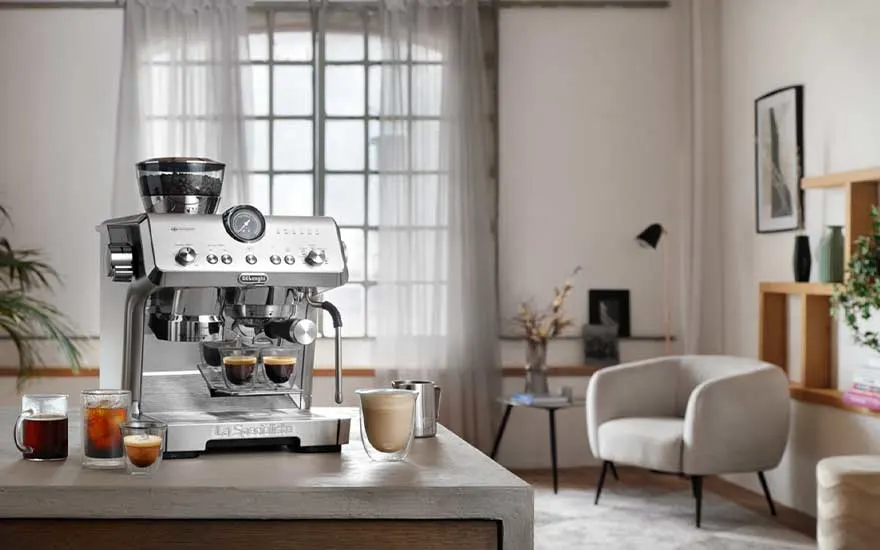
DeLonghi La Specialista espresso machine on a counter in a bright lounge, surrounded by inviting freshly made coffee drinks.

Fully automatic bean-to-cup coffee machines make freshly ground coffee with ease. They grind the beans, offer plenty of customisation options and allow you to prepare different types of coffee with consistent quality, such as espresso, lungo or ristretto. If your machine has a milk system, you can also prepare milk-based drinks such as cappuccino or latte macchiato. To keep your machine working properly, we recommend using medium-roasted, dry-roasted beans, avoiding oily beans and carrying out regular maintenance, including cleaning, rinsing and descaling. Brands such as De'Longhi and Philips are particularly well known for their reliability, performance and ease of use.

Frequently asked questions about fully automatic coffee machines