MM logo white 1
MM logo red

What is an RGB TV?

Anouk9 JULY 2026
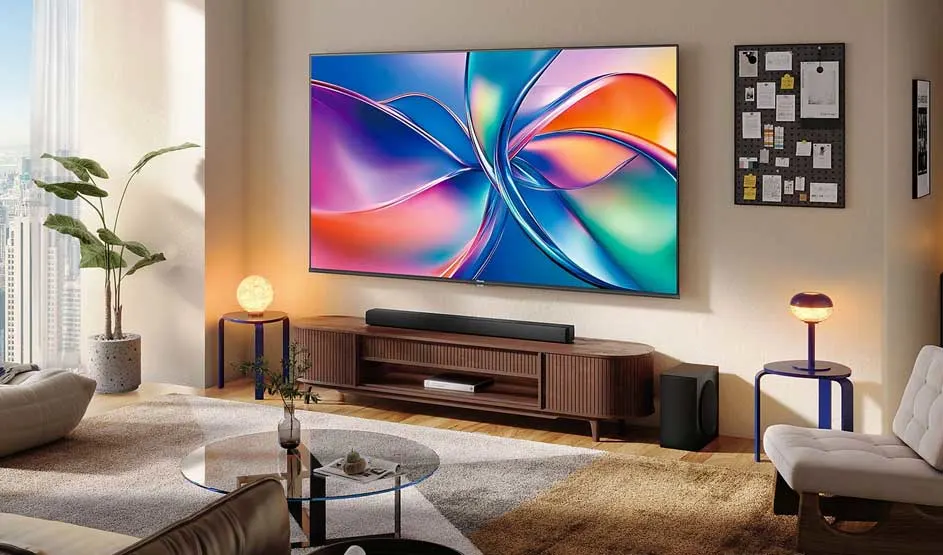
A minimalist lounge with a large wall-mounted TV, abstract canyon colours, wooden table, vases and soft daylight through tall windows.

RGB TVs are among the latest generation of display technologies. They combine high brightness, a wide colour volume and true-to-life colours. Find out how RGB technology works, what the differences are between RGB Mini LED and Micro RGB, and which type of TV best suits your viewing habits.

What is RGB and how does this technology work?

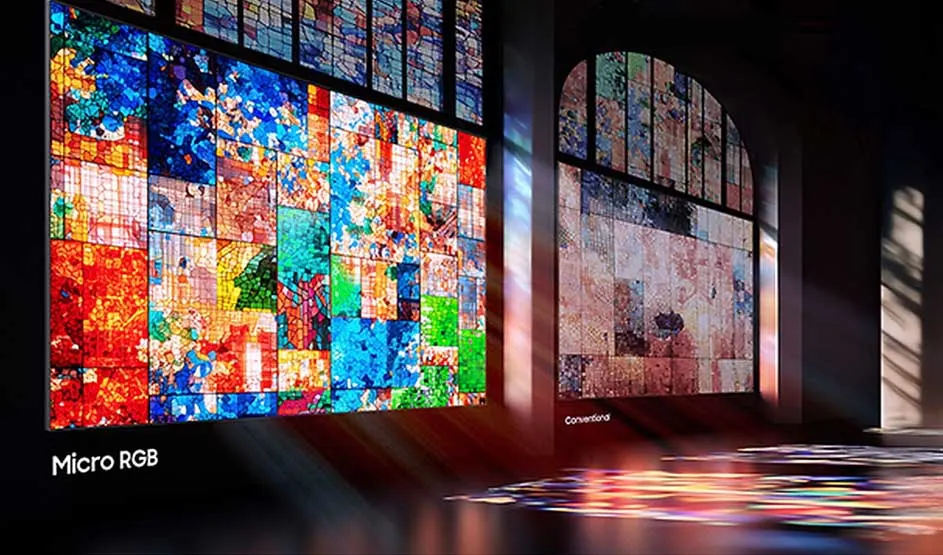
Two large displays show colourful stained-glass-like images, with a Micro RGB label and bright reflections on a dark floor.

RGB TVs use separate red, green and blue LEDs to produce colours. Traditional LED TVs, such as QLED TVs, rely on white or blue backlighting combined with colour filters. Because RGB TVs generate colours directly, they deliver higher brightness, richer colours and a more lifelike picture. HDR content benefits in particular, with brighter highlights and more realistic contrast. Compared to OLED TVs, RGB TVs also eliminate the risk of burn-in. As a result, static images, such as TV channel logos or a game's user interface, don’t leave a permanent mark on the screen.
Different types of RGB TVs

The 2 most common types of RGB TV are RGB Mini LED and Micro RGB. Both types of TV use red, green and blue LEDs to produce colours, but they differ in how they produce the image.

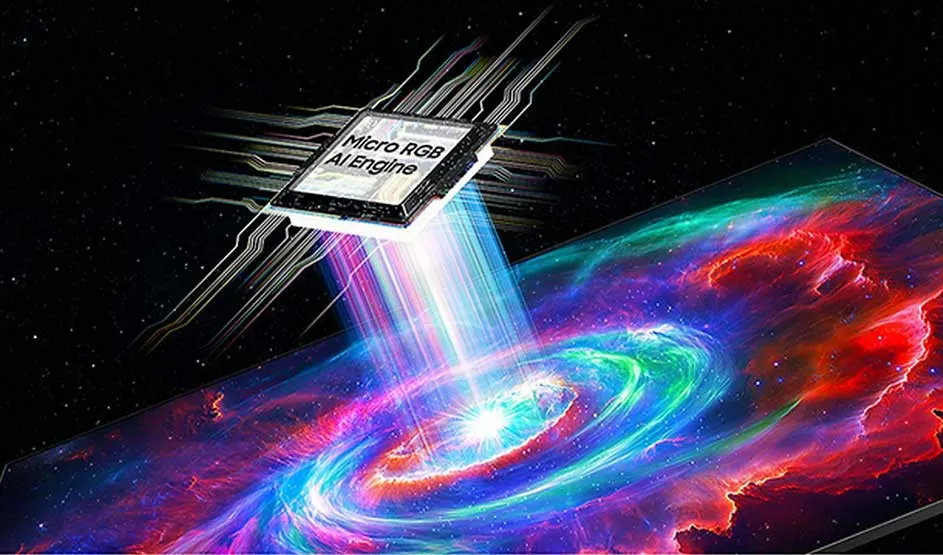
A Micro RGB AI Engine chip projects light beams onto a screen showing a vivid cosmic nebula in red, green and blue.

Micro RGB

A Micro RGB TV builds on the display technology of Mini LED TVs, but uses even smaller red, green and blue LEDs. This allows light to be distributed more precisely across the screen, creating a clearer distinction between bright and dark areas. As a result, shadow detail becomes more visible, subtle colour differences are reproduced more accurately, and bright light sources are less likely to appear surrounded by a halo. Because each LED is controlled individually, the TV adjusts brightness with great precision across different parts of the screen. This delivers stronger contrast, a wider colour range and higher peak brightness.

Benefits of Micro RGB:

  • Accurate colour reproduction with smooth colour transitions.
  • Better performance in bright scenes with stronger contrast.
  • HDR content looks more realistic.

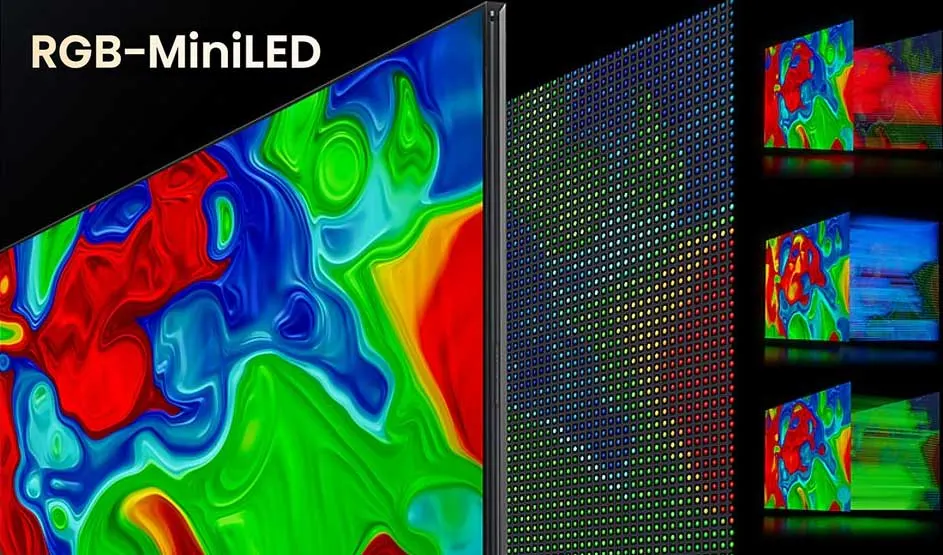
An RGB-MiniLED display shows flowing colour patterns beside an LED grid and smaller examples of screen rendering.

RGB Mini LED

Like Micro RGB, RGB Mini LED uses separate red, green and blue mini LEDs as its backlight. Instead of producing colours through a filter layer, as OLED and QLED TVs do, colours are generated directly by the LEDs. The result is higher peak brightness and a wider colour volume. While Micro RGB focuses on more precise light control and stronger contrast, RGB Mini LED stands out for its bright picture and vibrant colours.

Benefits of RGB Mini LED:

  • Wider colour volume with rich, vibrant colours.
  • Direct colour reproduction without colour filters.
  • Higher peak brightness.

RGB Mini LED vs Micro RGB

Data table
RGB Mini LED Micro RGB
Colour technology

Red, green and blue Mini LEDs.

Smaller red, green and blue LEDs.

Contrast

High contrast.

Higher contrast than RGB Mini LED.

Brightness

Higher peak brightness than Micro RGB.

High brightness.

Picture quality

Vibrant colours and bright images.

More detail in dark scenes and around bright light sources.

Which brands sell RGB TVs?

A modern living room with a large TV, soundbar, wooden cabinet, houseplant and colourful abstract visuals on screen.

RGB TVs are a relatively new type of TV, but they’re becoming increasingly popular. More and more TV brands are introducing models with this display technology. Samsung launched the first Micro RGB TV. Other brands offering Micro RGB and RGB Mini LED TVs include LG, Sony, TCL and Hisense.

Our advice on RGB TVs

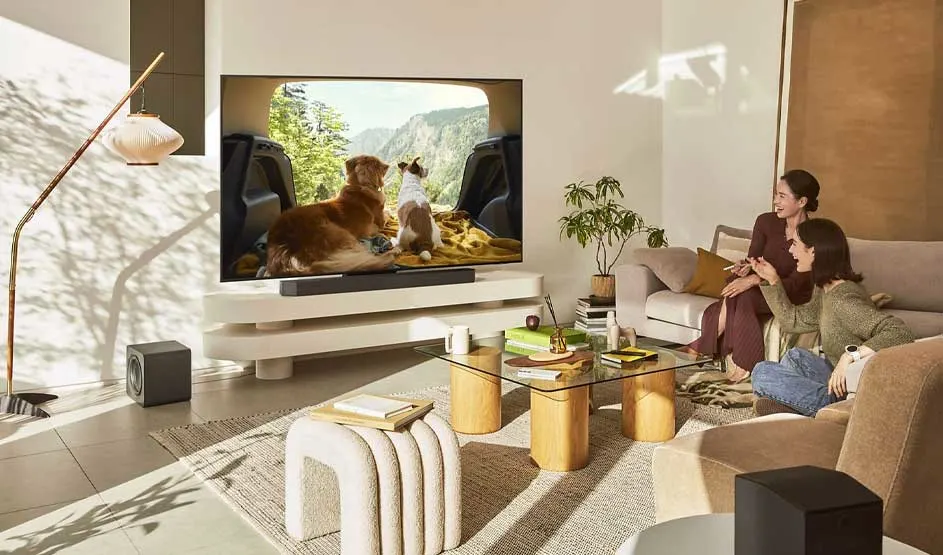
Two women relax on a sofa in a sunny living room while the TV shows dogs in a car with a mountain landscape.

RGB TVs represent the latest generation of display technology. Unlike other TV types, such as OLED and QLED, they use separate red, green and blue LEDs to produce colours directly. This delivers higher peak brightness, a wider colour volume and more lifelike colours than traditional LED TVs. Choose a Micro RGB TV if you want the most precise light control, the highest contrast and the most accurate colour reproduction. If you prefer higher peak brightness and an even wider colour volume, an RGB Mini LED TV is the better choice.

Which TV should you choose?